

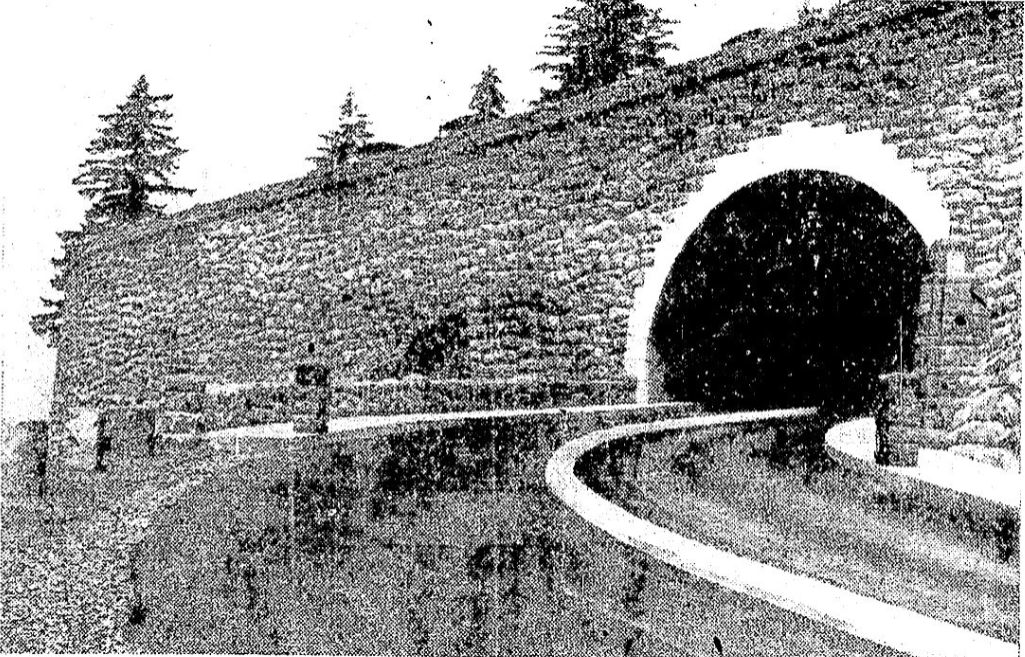
The Rocky Butte Road was seen as the first promontory along the Historic Columbia River Highway. The build offered both an opportunity and a challenge. It was designed so that the road was curved to fit to the landscape, basalt, so local that it was quarried from the butte itself, was placed in stone footings at rock outcroppings to look as though the structure had “sprung from the crest itself.”
Craftsmanship was limited to hand tools. The design was simple, clear, and utilitarian. The Stone walls are constructed by a repetitious pattern of stone and joinery. Some of the masons were highly skilled in using local basaltic rock and had learned their skill in Italy before immigrating to the United States. Many were unskilled workers quickly employed, they became more skilled and the rockwork often reflected improvement in skill. Many were also employed at Timberline Lodge.
The Rocky Butte Scenic Drive is representative of the northwest region and the time period in which it was built as one of the “artifacts of hard times and the auto touring age.”
Unique engineering features:
- Key arched barrel tunnel
- 27 feet high / 34 feet wide
- 375 feet long
- Concrete-lined interior
- Path doubles back on itself to negotiate a steep 5% gradient.
Detailing of the tunnel was to be adapted in subsequent road building throughout Oregon.

 Rocky Butte Preservation Society
Leave a comment